A timeless genre with infinite appeal
We can probably all remember the art we have seen throughout our lives. From the paintings and prints hung in the homes of family members to museums and galleries we have visited over the years.
We will have come into contact with many different styles, mediums and indeed Artists. 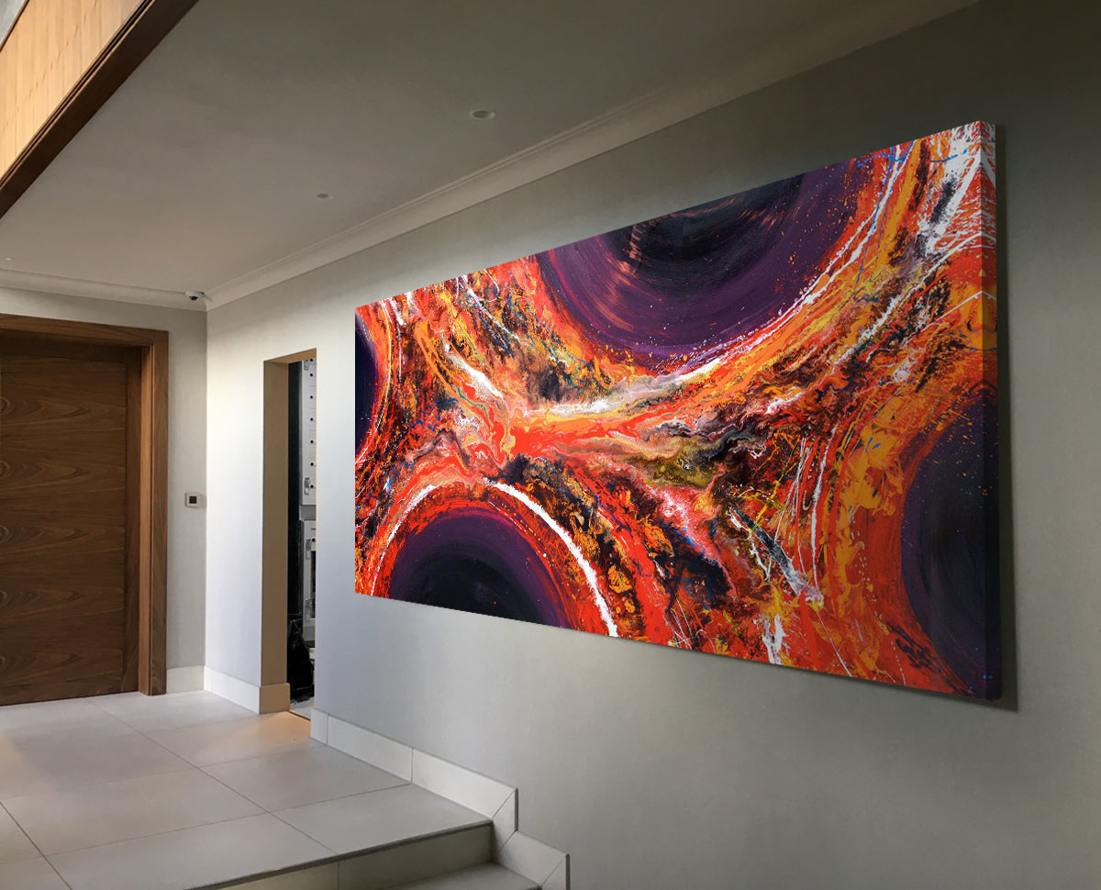
Famous artworks will always have a historical and cultural appeal. They are representation of a time and culture gone by.
They provide us with historical reference points and evidence. However not everybody wants a renaissance or impressionist painting hung on the wall of their home.
I am, of course, biased because this is my medium but Abstract art will always remain popular and current because it is not defined by the artist, the time in which it was created or a subject. Abstract art is emotionally and aesthetically malleable.
It is open to interpretation and its appeal does not alter when trends or fashions change. Abstract art is meaningful and personal. It is a full mind and body experience.
Purpose
Abstract art has a purpose for both the artists and the viewer. Many people collect abstract art to decorate their surroundings. Abstract art can be found in home and businesses across the world. It conveys meaning. 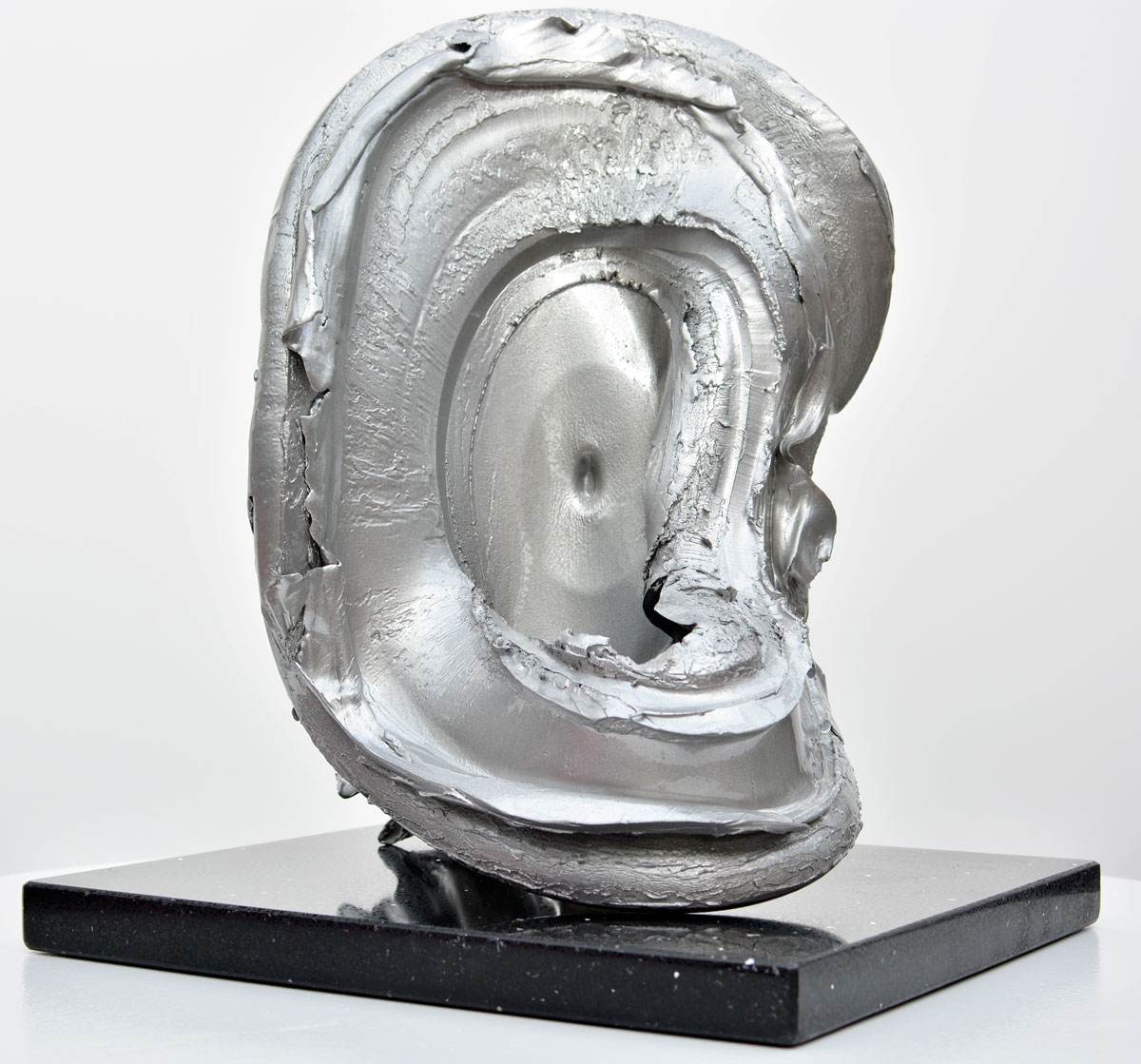
For corporate collectors they choose their abstract art to tell a story about them. They want their art to tell their clients who they are and what they stand for.
Corporate clients also use abstract art to influence their employees and the way they feel about the organisation and their work.
Emotion
Admirers and collectors of abstract art often do so because they have an emotional response to or connection with, the colours, forms, the texture or the energy that the artwork gives off. Abstract paintings have the power to alter and enhance the mood and the atmosphere of a living space.
Abstract art, more than any other artform according to the Nobel prize winning American-Austrian neuroscientist Eric Kandel, has the ability to connect more directly with viewers in ways that manifest in heightened emotional responses.
Interpretation
Abstract art often does not depict anything in the natural world and sometimes it does. Abstract art can simply be a visual expression of language or emotion using colour and form. However this is not true of all abstract art.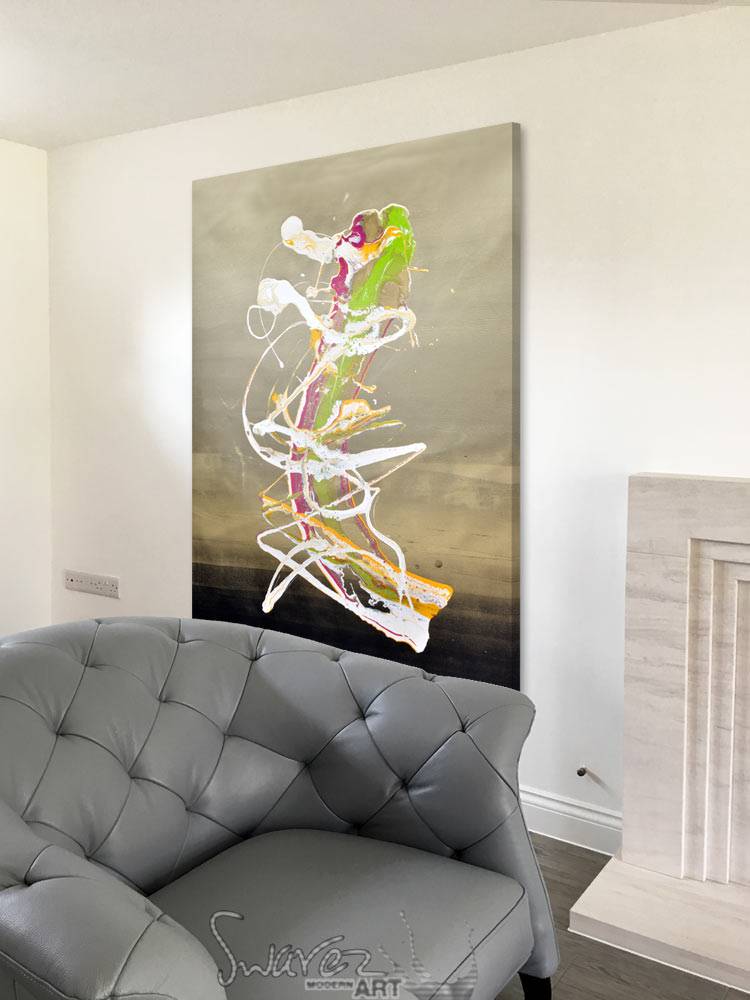
The word “abstract” means a departure from reality, but this departure can sometimes be only a slight one. This allows for partially abstract landscapes, figures, seascapes, etc. to be classed as abstract art.
The beauty of abstract art is that anyone can take what they see and interpret it however they wish. This can be said of any artwork but with abstract the imagination has the freedom to wander and draw its own conclusions. Ten different people could look at my artwork and see ten different things.
No two people will have the same experience. Abstract art gives you the freedom to explore the artwork and assign your own meaning to the piece. This intensely personal process enriches a viewer’s experience of an artwork.
My Mission
For some people abstract art will always make them feel uncomfortable because they don’t know “what it’s meant to be” and won’t “get it”. But for others, because it leaves so many details unspecified and requires more of our imagination, those who enjoy their own creativity will always enjoy it. 
If you’d like to have your own abstract art experience please arrange to visit my studio. Visiting means I’ll show you everything; talk to you about any part of what I do and take you round the bits no-one else gets to see.
I like to spend time with you when you come here so that’s why it’s only by appointment; nothing scary I assure you. It’s courteous to offer you all the time you want when you come here which is why an arrangement is important.
Viewings can be arranged for any time during the day, evening or weekend; I’ll accommodate you no matter when you want to visit.



Mr. Swarez, During COVID I discovered your art on YouTube. I literally cried from joy and relief. I knew I had found my people!! I’ve always struggled with imposter syndrome and trying to to validate abstract art to people who don’t consider it art. The sadness and fear that caused I can’t explain. But, I can paint it. You make the most beautiful abstract art I’ve ever seen! It touches my soul. You really helped me a few years ago too. On one of your videos I mentioned to you in the comments that while painting I constantly am thinking about what others would think about it. It was keeping me locked up inside. You told me that there is only one person that needs to like my paintings -myself! You said I need to like it just for myself and also, if I like it that means someone else will like it and someone else and so on until someone will buy it! You changed my life that day and I shall never forget it, never stop being grateful that you took the time to help me! Since that day I have promoted your art across the Internet and how you unselfishly the helped me. I’m still a work in progress as those self doubts run deep. But, I’ve come so far because of you! Another way you helped me is the way I paint some people think it isn’t art so for many years I be believed that to be true. When I saw all of your work I thought what I çreate IS art! Oh, happy day! Which brings me to the following. I want to address some of the thoughts made by a commentor above. Even though he wrote that 4 years ago and will probably never see this, maybe it could help someone else. So here goes .
I’ve never understood how someone doesn’t “get” abstract art! As a very young child in the early 1960s it was the first art I had an emotional response to. Of course, I didn’t think of it in that way at age 4, but that’s what it was. The appeal of abstract never waned. Eventually I picked up a brush myself and my soul celebrated! I often hear people say (like the comment above) some variation of ,but what’s it supposed to be, it doesn’t look like anything real, they aren’t a real artist, and so on and so forth. First, I greatly admire people who can create realistic art. It takes amazing skill and talent. There was a time when realism in art was extremely important. It documented great events, daily life, and of course, religion. Today we don’t need it for those reasons because if you want to see something as it really is then just take a photo. But, that still leaves out the most important quality (imo) of any art. The human element. A photo can never be a painting because it lacks the vision and emotion of the artist but it can be an art because of the person taking the picture. Which, brings me back around to the questions some have (including the gentleman above) regarding abstract art. Many people mention the same things. They may ask what is it, it doesn’t look like anything and how am I to know what I’m supposed to feel, that’s not real art, or they aren’t a real artist. That’s just some of the beauty and brilliance of abstract art. You get to see and feel whatever you want! The artist doesn’t tell you that. Take a bit of time and a few deep breaths. Then look at the painting, no, really SEE the painting. Ask yourself (not the artist or the person next to you) what emotions are coming up for you? Choose a color in the painting and ask how does that shade of blue make me feel? Then look at a darker shade of that color and ask what does that color remind me of? Go through the various shapes in similar fashion. An Abstract artist doesn’t tell you what you see or feel. The viewer interprets the emotion, the vision, the experience. If not right away maybe 6 months later, the colors and shapes, the texture, and light will tell you a story -about yourself. Cheers!
Wow! What can I say to that Shauna – except a massive thank you!!! That kind of story is just what I needed to hear right now, thank you so much
This is such an interesting article, including the responses.
I have often wondered why abstract art is so popular now? I do appreciate abstract art for sure, however I have always been drawn to art that has some kind of context. I want to know what the painter has interpreted on the canvas (or at least pretend to know). Most of my work includes mandalas, which have different meanings for different people. I personally used the process of creating mandalas to heal and bring a sense of meaning to my life. And I suppose it still does that for me today – 24 years later. I love the structure of beginning with a circle. I’m not sure if it would be considered abstract or not. My guess is no? I would love some feedback from you.
I would imagine you can attach an abstract label to just about anything that isn’t immediately recognizable as figurative… who knows!
Thank you so very much for this explanation of why abstract art appeals to many people. I’m one of those people. I’ve been puzzled for years about why I can feel emotionally overwhelmed in the presence of some artworks. I once stood rooted in place seeing a huge painting by Cy Twombly, my heart swelling in my chest. Same thing has happened in response to artworks by far less known artists over many years. It never occurred to until this morning to enter the question “Why do I like abstract art?” in a search bar. I didn’t expect to find an answer, but there yours was! I’m very happy to know that it’s perfectly fine for an emotional reaction to abstract art to be enough.
By the way, I’ve loved Twombly’s work for years, but when I read a biography of him a couple of years ago, my enthusiasm for it dimmed somewhat. I’m didn’t really need to know about the content.
Anyway, again, thank you!
Hi Laurel. Thank you for your wonderful comments. I know exactly what you mean about Cy Twombly. Glad you found me though and i am very pleased about that! Have a great day. Cheers>Ed
I laughed out loud when I read your comment because I feel the same way. I don’t have any idea why some abstract art pulls me in, and why some does not. I just had the opportunity so spend 2 weeks in Venice with the European Cultural Academy. (It came completely out of the blue, and I felt so under-qualified!) I was exposed to more art in that 2 weeks than I have in my lifetime. And so much of it was abstract! I googled “why is abstract art so popular”, and ended up here. Great fodder for my soul:)
Estoy fascinada con tu arte, los colores, diseños, formas, estoy abrumada de tanta belleza plasmada en cada cuadro. Gracias por compartir.
Muchas gracias Aida – que es muy amable de ti!!
I am sorry to say that l cannot understand Abstract art and never will.To me it’s meaningless,and opposite to the way you describe it’s meaning.
The traditional masters were explaining history in their painting s.Abstract doesn’t explain anything to me .
I can’t even see what it is,and another thing how do you know when it’s finished, or if it’s correct.
I don’t think the old masters would be happy with abstract art as it’s not discribing anything.
Also l think there far too much of it in the modern world.
This had made it hard for people to sell traditional art.
As people are more brainwashed into buying abstract art.
Mark Goodwin
Appreciate your feedback Mark!
I had this feeling too, for a long time, having been brought up to respect classical art & the skill & training which went into developing figurative masterpieces.
While there is a lot of clumsy creation going on these days, I have come to wholeheartedly disagree that it is meaningless. I have come to realise that abstract art is a thing in as of itself, in that it can, when conditions are right, invoke a feeling which even some of the most ‘accurate’ or skilled figurative pieces could not.
There is still skill in creating compositions, which despite being absent direct ‘meaning’ or ‘explanation’, amalgamate components or methods that express a feeling or implication of something ‘real’.
Just because something does not require the same technique or structure, in terms of its creation, does not entail that it does not involve a level of talent or skill. And to paint an entire art form with the same brush is a little hasty, given that much of abstract art is only appealing due to how deliberately it has been composed.
That being said, I do agree that there has been an over-transition to abstract, in that it has overwhelmed classical art, in many regards.
I do believe that this will balance out in time, with each being treated as they should be, distinct means of artistic expression; they are different forms, to be treated as such, with neither replacing the other.